Business Inquiry
Share the categories, anticipated commercial quantities, purchasing frequency, and the retail or foodservice settings in which the products will be used.

Business service 03
Food supply discussions built around commercial purchasing.
Discuss Your Business Requirements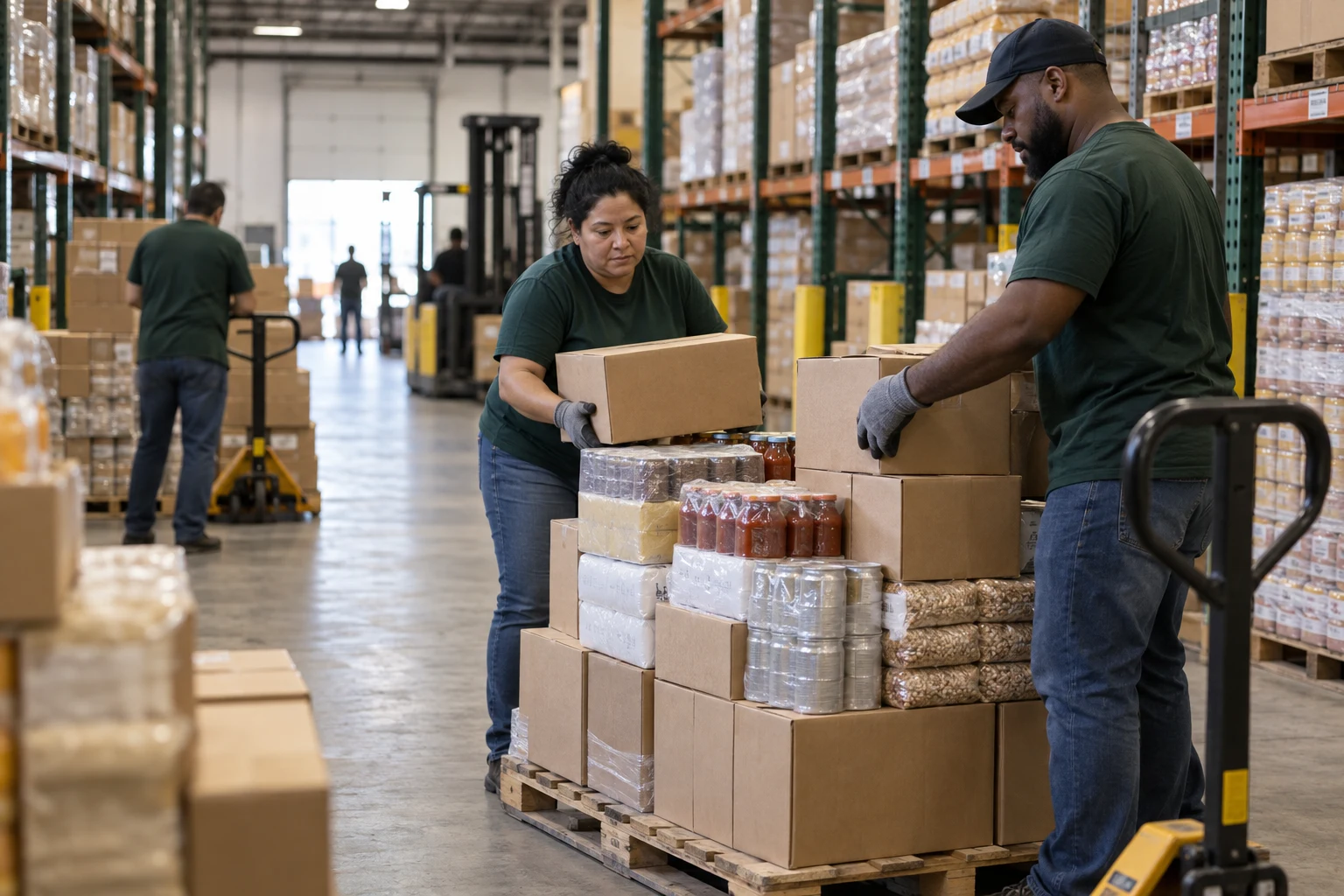
Wholesale / Retail Supply / Foodservice / Distribution
We provide food products for retailers, grocery stores, convenience stores, restaurants, foodservice businesses, and other commercial customers. Our wholesale offering covers multiple everyday food categories, allowing customers to source different products through a flexible supply relationship.
We understand that different businesses have different purchasing requirements. Our approach allows us to support various product selections, packaging formats, order requirements, and supply arrangements based on customer needs.
Wholesale purchasing involves more than increasing the quantity of an individual retail item. Case configurations, handling conditions, receiving capacity, and expected usage all influence whether a proposal is practical. We discuss these factors with customers so that product selections can be assessed in the context of their operations. A suitable arrangement should explain what is being supplied and how the buyer plans to receive and use it.
Our product scope includes packaged foods, snacks, sauces and condiments, cooking oils and grains, beverages, and canned foods. A customer may inquire about a focused category or a broader selection. Combining categories can help organize a purchasing conversation, but it does not mean every item shares the same availability, delivery schedule, storage requirement, or commercial condition.
Retail buyers may need consumer units that fit their shelf plan, with outer packaging that supports receiving and replenishment. Foodservice buyers may prioritize practical kitchen formats, portions per container, and storage after opening. We encourage customers to describe these differences explicitly. A larger pack is not automatically more economical if it creates avoidable waste or handling difficulties.
Proposed quantities should distinguish individual units, cases, and other agreed purchasing measures. Minimum quantities, mixed product arrangements, and frequency of supply are discussed for the particular proposal rather than published as universal conditions. Where quantities are still estimates, that status should remain clear until both parties confirm what can be supplied under the agreement.
Delivery discussions benefit from accurate destination details, receiving hours, unloading arrangements, and a designated contact. Customers should explain any storage restrictions or special handling needs before terms are finalized. A business accepting food products also needs a practical process for checking the delivery and retaining relevant packing or lot information. These operational details can influence the suitability of a purchasing arrangement.
For repeat requirements, the parties can review usage patterns and discuss future purchasing needs, subject to availability and a confirmed commercial scope. Forecasts support planning but do not automatically create standing orders or reserve inventory. Each commitment should be documented in the applicable agreement or accepted purchasing record.
If a product specification, quantity, or delivery expectation changes, communicate the change promptly. We can discuss its effect on the agreed arrangement and whether alternatives are appropriate. Product replacements should be reviewed and approved rather than treated as interchangeable because they belong to the same category. Clear records help both parties understand what was accepted.
A purchasing team may also need to coordinate internal approval before accepting a wholesale proposal. Keeping the product description, quantities, and delivery assumptions together makes that review easier. When a buyer expects several receiving locations, each location should be identified rather than treated as an automatic extension of the first. The parties can then discuss whether separate arrangements are necessary and record any agreed differences before fulfillment is authorized.
This service is intended for supermarkets, independent grocers, convenience stores, specialty retailers, restaurants, caterers, hospitality operators, and other business buyers. It is appropriate when a customer needs commercial quantities and direct discussion of product and supply conditions, rather than an individual household purchase.
Illustrative application scenario: an independent grocery business is planning shelf-stable foods, while its associated catering operation needs selected ingredients in larger packs. A wholesale discussion separates the consumer and kitchen requirements, confirms case quantities, and reviews receiving arrangements. The parties then evaluate whether a coordinated proposal is workable. This is a planning illustration, not an account of a named or completed customer project.
Share the categories, anticipated commercial quantities, purchasing frequency, and the retail or foodservice settings in which the products will be used.
Review pack sizes, case units, storage conditions, receiving capacity, and any ingredient or product information needed by the purchasing team.
Compare relevant product proposals and discuss whether the quantities and formats fit the customer’s merchandising, preparation, and storage requirements.
Confirm the commercial units, accepted specifications, payment conditions, delivery responsibilities, and inspection procedure through the agreed written contracting process.
Coordinate confirmed supply information, communicate relevant changes, and help route delivery or product concerns using the agreed contact and documentation process.
Wholesale inquiries are reviewed individually. This website does not publish a live stock position, promise universal minimum quantities, or provide automatic recurring fulfillment. Prices, capacity, timing, and any ongoing supply commitments require direct confirmation. Contract terms govern each accepted transaction.
Discuss Your Business RequirementsBusiness inquiries
Share your organization, purchasing goals, and timing so we can review the next steps together.
Or email support@lintradinginc.com.